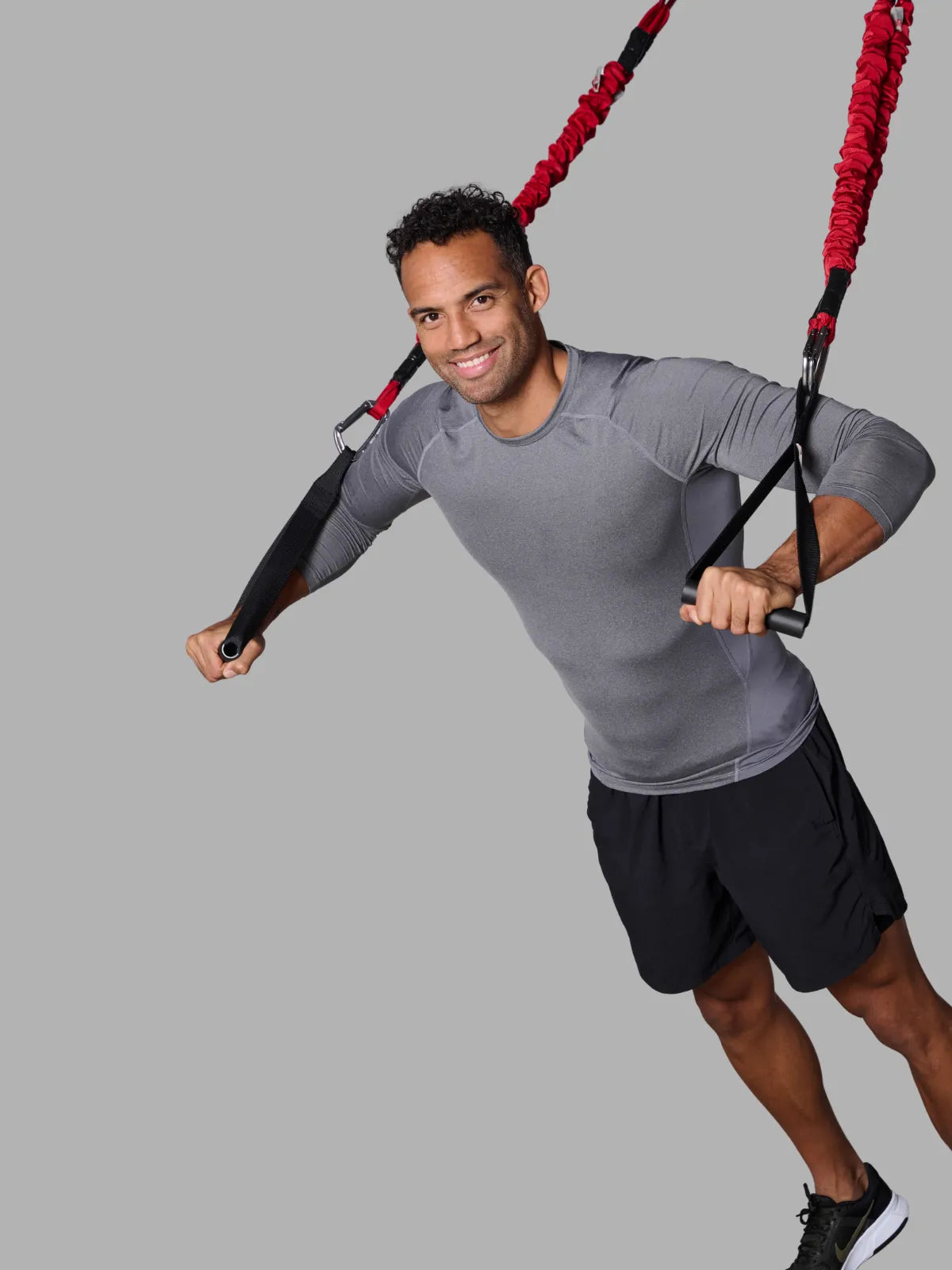
A spinal cord injury as a turning point from a technical-commercial professional field changes not only the visible but also much that is invisible. Reinhold Gruber's life changed in the blink of an eye; at 21, his emotions, pain levels, well-being, and performance were turned upside down. Alongside the symptoms of an incomplete spinal cord injury, consistently impaired vision was one of the greatest challenges of his daily life.
After several years, functional optometry—a practice not yet widely prevalent in Germany—significantly improved these vision-related issues. But how is it possible for vision training to have a direct and noticeable effect on symptoms in the pelvic floor and pain in the spine?
Studying sports science allowed Reinhold to gain a deep understanding of human movement. While the hurdles of his studies seemed insurmountable at first, the application of neuro-athletics helped him complete his degree. Neuro-athletics also provided the answers to the questions surrounding the connections between visual training and pelvic floor function, and how this impacts overall well-being.
Further investigation revealed that his training had unconsciously served as rehabilitation for an undiagnosed traumatic brain injury—an area where individual adaptation is the key to success. Neurocentric training offers what is arguably the most adequate approach in this widely overlooked field.
In addition to his current master's degree in applied neuroscience
Reinhold Gruber works with clients in the areas of
incomplete spinal cord injury, continence, and traumatic brain injury. He maintains close cooperation with the team at ARTZT neuro
for the supply of products as well as the expansion of the existing portfolio.
neurotraining-gruber.de