Eric Cobb in an interview about his neuro-athletics training Z-Health
Reading time: 7 minutes
ARTZT: Dr. Eric Cobb, what does the Z in Z-Health stand for?
Eric Cobb: Everyone asks me that. When I started Z-Health in the early 90s, I worked with a Russian doctor and trained in Russia. The Russian word for health is здоровье (zdorov'ye) and it starts with a Z. So it's a tribute to those early influences. I tried to change it over the years, but it kind of stuck. We like it, so we kept it.
ARTZT: What exactly is Z-Health and how did it all start?
Eric Cobb: Z-Health stands for two areas. First, for the company, and second, for our training concept. We have an extensive curriculum, comparable to a master's degree or a doctorate. We specialize in "Neuro-Centric Training" for physiotherapists, doctors, and sports coaches who want to integrate the components of the head and brain into their field of activity.
As I mentioned, I started training right after school and initially felt fit and well-prepared with the school material. However, I quickly became dissatisfied and frustrated with the results I achieved with my clients, athletes, and patients. There were often only small improvements, and usually, the process took a very, very long time. Furthermore, I myself had some injuries and was, so to speak, a chronic pain patient myself – a patient with many therapies and few successes. I was fortunate enough to have a professor at the university who – today one would say – had studied and taught modern pain neurophysiology and inspired me on this topic. He sparked my interest in neurology itself and how knowledge of neurology can be used to improve movement and pain. Between 1995 and 2002/2003, I tried out my new knowledge on myself and my clients. These insights are now the basis of the Z-Health training concept. When people ask me how Z-Health came about, the answer is: "Z-Health is the result of my own frustration." And I see that in the participants of our seminars as well. They want to help their clients and patients faster and more efficiently.
ARTZT: You are one of the world's leading experts in neurocentric training and have now trained many coaches and therapists. Why is this topic currently in such high demand?
Eric Cobb: That surprises me too. I think there are two reasons why my concept appeals to so many people. First: Coaches and therapists repeatedly reach their limits with their known methods. They are increasingly understanding the important role that knowledge about the function and mechanisms of the nervous system plays for their own success as therapists or coaches. Second: neuroplasticity. Neuroplasticity means that our brain can change due to challenging and purposeful training. That doesn't sound so cool today, but 20 years ago, when I was in school, the state of affairs was that the brain stops changing and growing after the age of 25. Now we know that new neurons can be formed and neural pathways can be changed through action throughout the entire lifespan, which naturally sparks a lot of interest in neurocentric training. Much of what we do in the training sessions is to convey drills and assessments that, with the right focus, can bring about changes in brain structures. And if everything is applied correctly, these changes happen very quickly, which is cool!
ARTZT: Can you give examples of how the work of therapists and trainers or the situation of their clients has improved due to neurocentric training?
Eric Cobb: Yes, of course. I design and conduct courses the way I would like to hear them myself. I am a practical person and try to be very clear. In all courses, there are three different areas. First, science. Not all participants love that. They think, "Science and learning, that was in school. We want to get straight to practice!" But I think understanding how the brain and body relate to each other is very important. This is followed by practice, where we do many assessments and tests that many therapists, trainers, and doctors have either never seen before or have only learned in a very static model. We help them adapt existing knowledge and show them many tests. For example, in our Fundamental Course, they learn about tests for the visual and vestibular systems. Few know these from their previous training. After the tests, they learn training drills that they can use to improve the identified problems. In all courses, you get a package of background information, tests/assessments, and exercises/training drills, based on the tests.
ARTZT: What was the most impressive result someone achieved with your system?
Eric Cobb: It's always exciting. When I'm asked about it, people always expect a story about a professional athlete or an Olympic athlete, since I've been and still am very involved in that area. But the people who impress me the most are those who have the biggest problems or most severe injuries. There's a scientist in the US who researches brain injuries. He says that it takes just as much time and effort to restore arm movement after a stroke as it does to prepare an athlete for the Olympic Games. It's the same work, just without public attention and without the financial resources. For me, therefore, the best story is recovery after severe injuries.
Ten years ago, a young woman came to me as a patient with brain inflammation. She had previously received an antibiotic infusion in the hospital to save her life. However, the antibiotics had destroyed her vestibular system, which is a known side effect of this powerful medication. She had severe balance problems, couldn't walk, and was in a wheelchair. She had already gone through a special neuro-rehabilitation program in a hospital for two years.
I met her three years later. She could barely walk with a walker and was only 26 years old, so very young. She was recently married but couldn't drive a car or bike, couldn't travel, and at best could walk about 50-100 meters, then she would fall. The interesting thing was that I only worked with her four times. We used fundamental assessments and some complex visual and vestibular drills. I saw her once every two months that year, and it got better each time. At our third meeting, she said that she had driven to the sea with her husband – a two-hour drive! A year after our last meeting, she sent me a seashell from a beach in California. She actually lived in Boston and wanted to let me know that she could travel now.
Today, she sends me a card every year, has moved, and has a baby. She has her life back. I always tell people: The good thing about neurocentric training is that if you're good at it, you can identify the problem. Then the patient has to do their exercises. I have a lot of respect for that, because they have to work hard.
ARTZT: That's an impressive story. Neurocentric training obviously helps patients improve. You also say that this training helps to achieve goals faster. Do you have an example of this?
Eric Cobb: Whenever I work with patients, I want to select assessments that test the dysfunctional area as precisely as possible. What we know so far is that changes in brain function can be seen very, very quickly. The brain is very adaptable. You can see changes in blood flow, oxygen levels, or mineral composition, as well as function.
For example, if you observe blood flow in a functional MRI and move the patient's hand, you can directly see the increased blood flow that results. One of our goals is therefore to bring about changes (pain, ROM, strength, etc.) as quickly as possible for existing dysfunctions with a suitably dosed impulse. We test, apply a stimulus or perform drills, and then test again. Changes or feedback sometimes occur so quickly that they are directly visible if the correct stimulus has been applied – unfortunately, also if an incorrect stimulus has been applied. So it works both ways. That's an important point.
Normally, students in advanced seminars always learn new content. Often, the most important insight here is to recognize which methods and tools one does not use. We try to understand how the brains of our patients work and which methods and tools are needed – and, above all, which are not. Only then do fast results occur.
ARTZT: Can you elaborate on how your training works for chronic pain?
Eric Cobb: Chronic pain is a peculiar animal, a species unto itself, because it has so many different parameters. In our courses, we spend a lot of time on the subject, because modern pain neurotherapy is both fascinating and complicated. But whenever you look at chronic pain, the most important thing is this: If you have a patient or athlete with chronic pain, let them do exactly what they've always done. It probably won't solve the problem, otherwise, it would have happened long ago. So you have to look at things differently. Pain is the result of a collection of dysfunctions or – as we say – threats. Take knee pain, for example: Tests reveal that there are also visual problems, hearing problems, and balance problems.
There are so many different possibilities. Maybe you also sleep poorly and have a job you don't like. Research shows that all these different parameters play a role in the individual chronic pain cycle. Whenever we work with a chronic pain patient, we therefore have to make sure that all these different influencing factors are considered and that we gradually eliminate them. What I can say from my 20 years of experience in training with chronic pain patients is that most of these patients have problems in the visual area or in the inner ear. We address this problem first. This is a good step to see what they need and to identify the other problems.
[[featured_products]]
ARTZT: We support your courses with a selection of extraordinary small devices that you suggested. These look very special, quite different from the products we usually sell. Can you tell us something about the importance of these products in your courses? How do you use them?
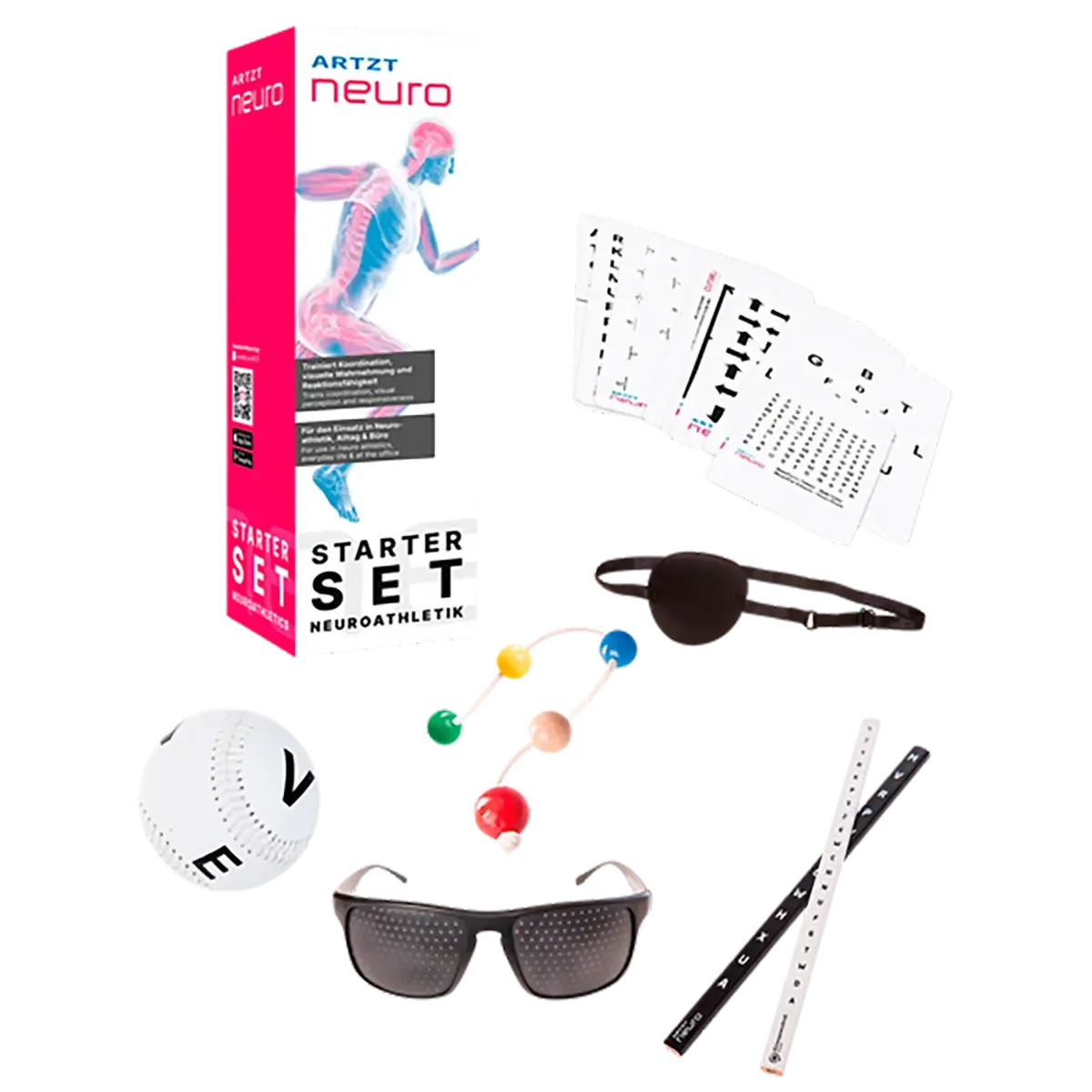
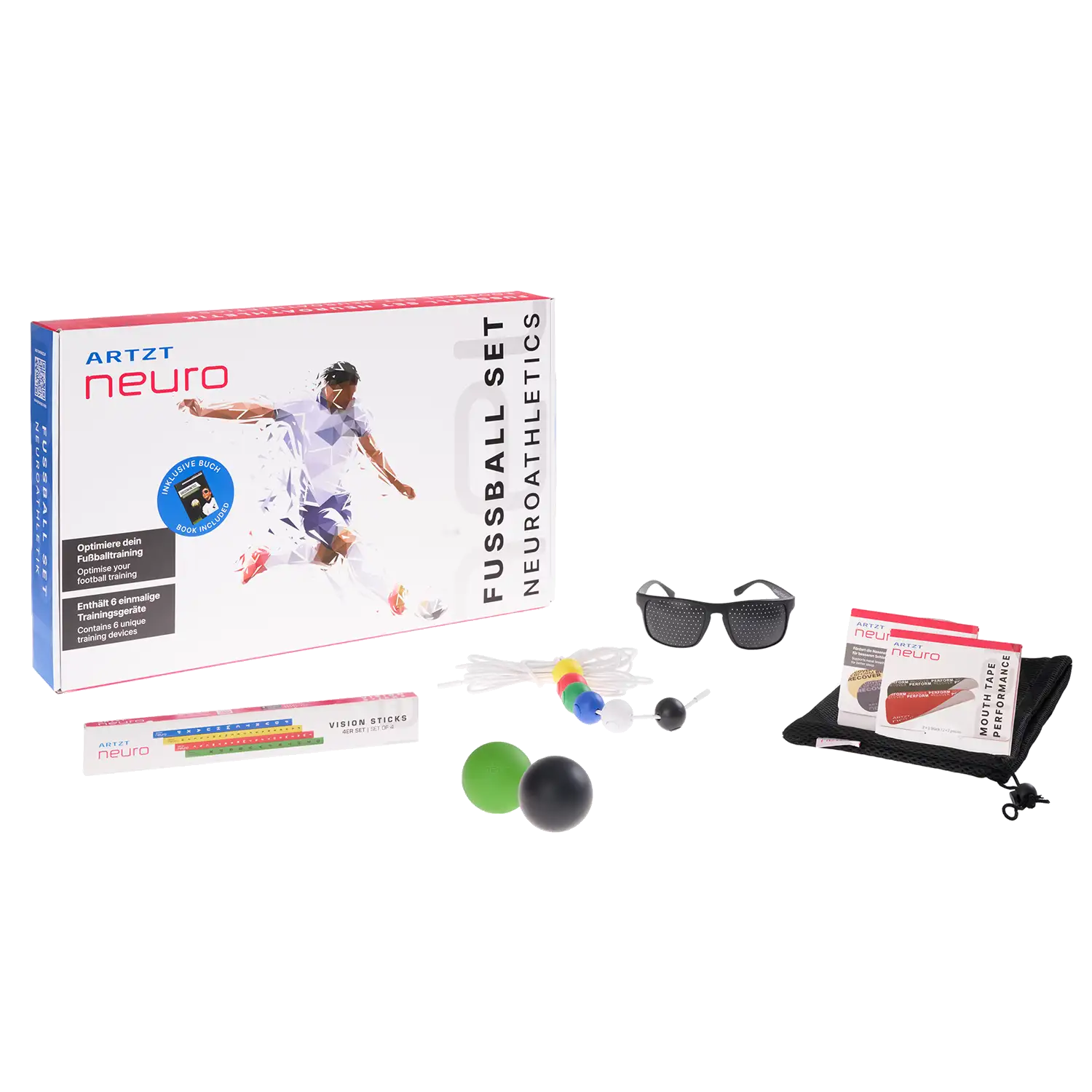
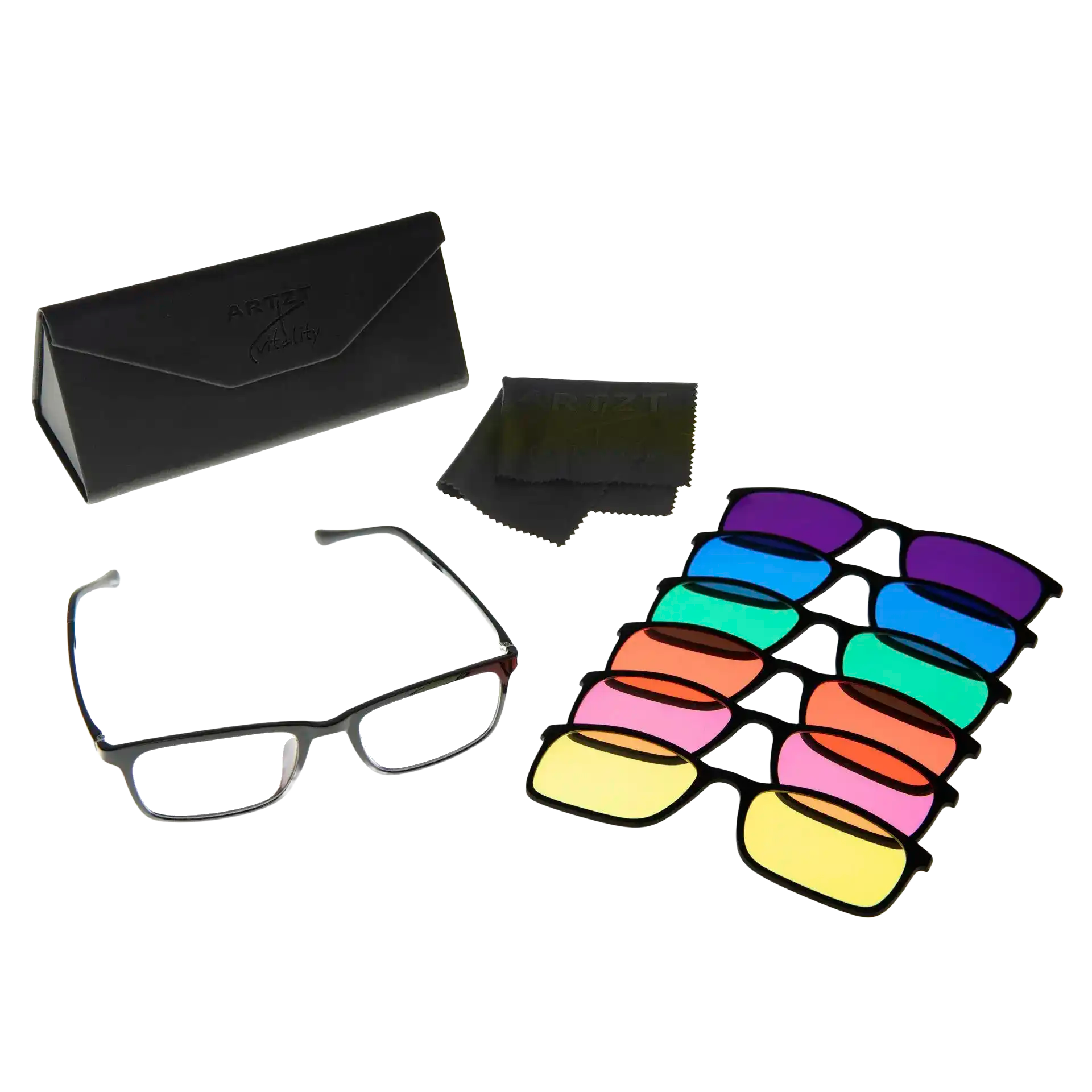
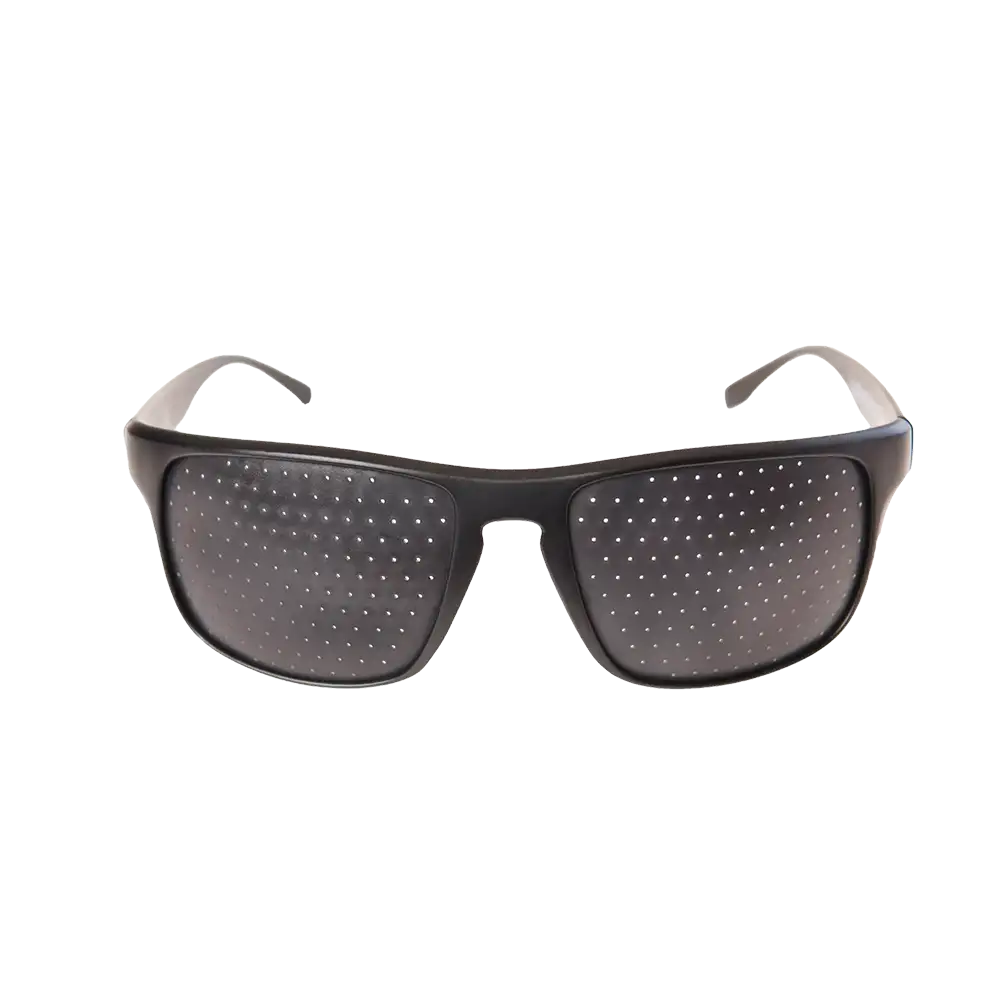
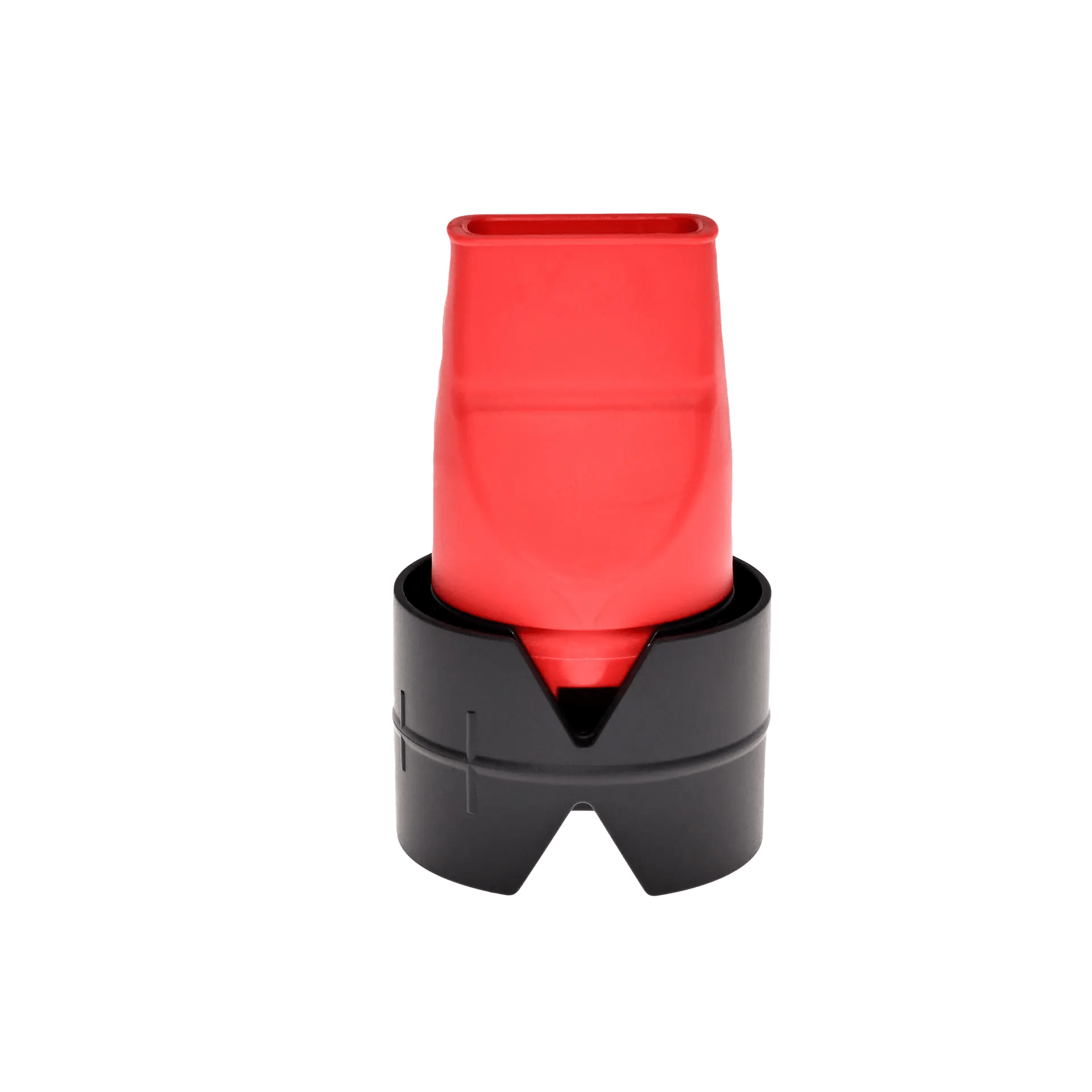
Eric Cobb: These products are not our own development. In fact, I mostly look for or use existing products and use them differently than intended. I try to find other uses to fulfill our purposes. Among the small devices, you will find many that serve to test the visual system: visual boards, cords, beads, and other crazy things. In addition, we have small handheld devices for testing perception. The most common things you see in our courses are portable small devices. This is important. When you start neurocentric training, the patient must be able to continue the exercises at home. It is not enough to treat the patient once or twice a week. They should become their own therapist. Therefore, you will not find anything that requires a lot of space with us. We use simple, small things that we can give to patients so they can train at home.
About Eric Cobb
Eric Cobb graduated Magna Cum Laude from the University of Western States with a degree in Chiropractic in 1994. In 2003, he founded Z-Health Performance – a company specializing in the development of advanced, neurologically centered rehabilitation and sports performance programs. He and his team train fitness coaches, sports trainers, therapists, and doctors from all over the world.
This article was originally published on artztneuro.com on August 22, 2022.

Written by Jonas Schön