
Fitness training for beginners – how to get started
Summary for speed readers
Why fitness training? Regular fitness training improves heart health, lowers the risk of chronic diseases, reduces stress, lifts your mood and increases your performance in everyday life.
How to get started? Begin with realistic goals (e.g., 2-3 sessions per week of 20-30 minutes each), simple full-body exercises, and a clear but flexible training plan.
How often should you train? For fitness training for beginners, 2-3 training sessions per week are usually ideal, combined with sufficient regeneration, sleep and good nutrition.
What should you pay attention to?
- Analyze body posture and correct it with targeted exercises.
- Control your breathing: exhale during the strenuous phase, inhale during the easier phase.
- Train stability and mobility as a foundation before increasing intensity and weights.
Conclusion: There is a suitable fitness training for everyone – with patience, perseverance and the right planning, regular training will become a fixed, healthy part of your everyday life.
Reading time: 7 minutes
Fitness training for beginners doesn't have to be complicated or time-consuming if you keep a few basics in mind. In this article, you'll learn why regular workouts are so important, how to plan your start, and the role that posture, breathing, training frequency, stability, and mobility play – including tips for your home fitness training.
Contents
- Why is regular fitness training so important?
- How can I get started with fitness training as a beginner?
- Are there any videos that can help me get started with fitness training?
- How can I improve my posture during fitness training?
- How often should I train as a beginner?
- How do I breathe correctly during fitness training?
- How do I incorporate stability and mobility into a healthy fitness training program?
- How can I make my home fitness training more effective?
- Conclusion: There is a suitable fitness training program for everyone.
Why is regular fitness training so important?
Regular fitness training is so important because it simultaneously improves your physical health, your mental strength, and your performance in everyday life.
Regular exercise strengthens your heart and circulatory system, reduces the risk of diseases such as diabetes, obesity, and cardiovascular problems, and supports a healthy weight. At the same time, your mental health benefits: exercise reduces stress hormones, improves your mood, and enhances your sleep.
Over time, you'll become more resilient in everyday life: climbing stairs will be easier, carrying groceries less strenuous, and you'll feel more alert and energetic. This feeling of inner strength and self-confidence is a crucial motivator for sticking with your fitness training.
How can I get started with fitness training as a beginner?
You can successfully start fitness training as a beginner if you start with realistic goals, take small steps and give your body time to get used to the new strain.
Instead of aiming for a six-pack or peak performance, it's better to focus on simple, achievable goals: for example, 20-30 minutes of exercise three times a week and a noticeable improvement in your well-being.
- A clear but flexible plan is helpful:
- Select fixed training days in the calendar.
- Plan short workouts that you can actually stick to.
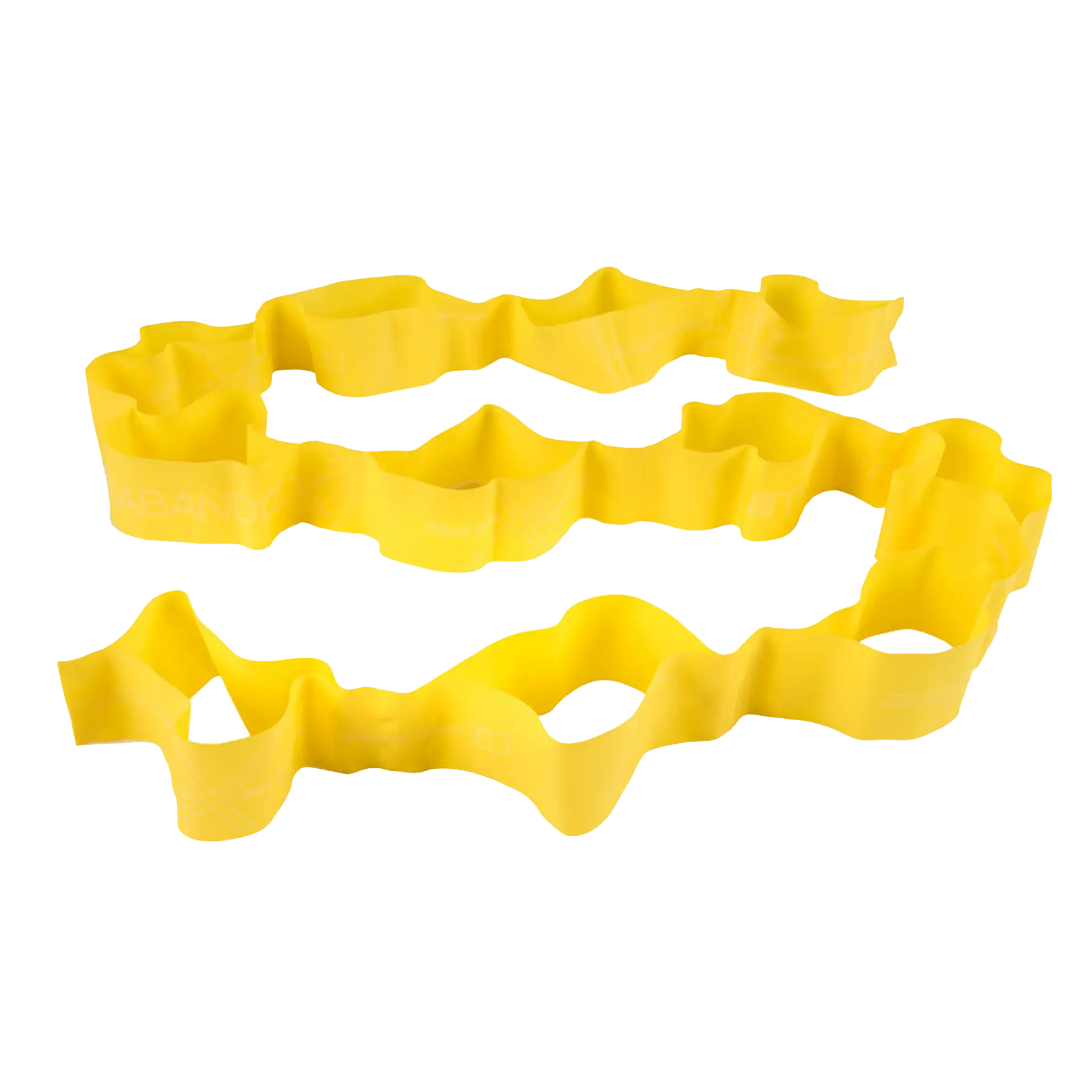
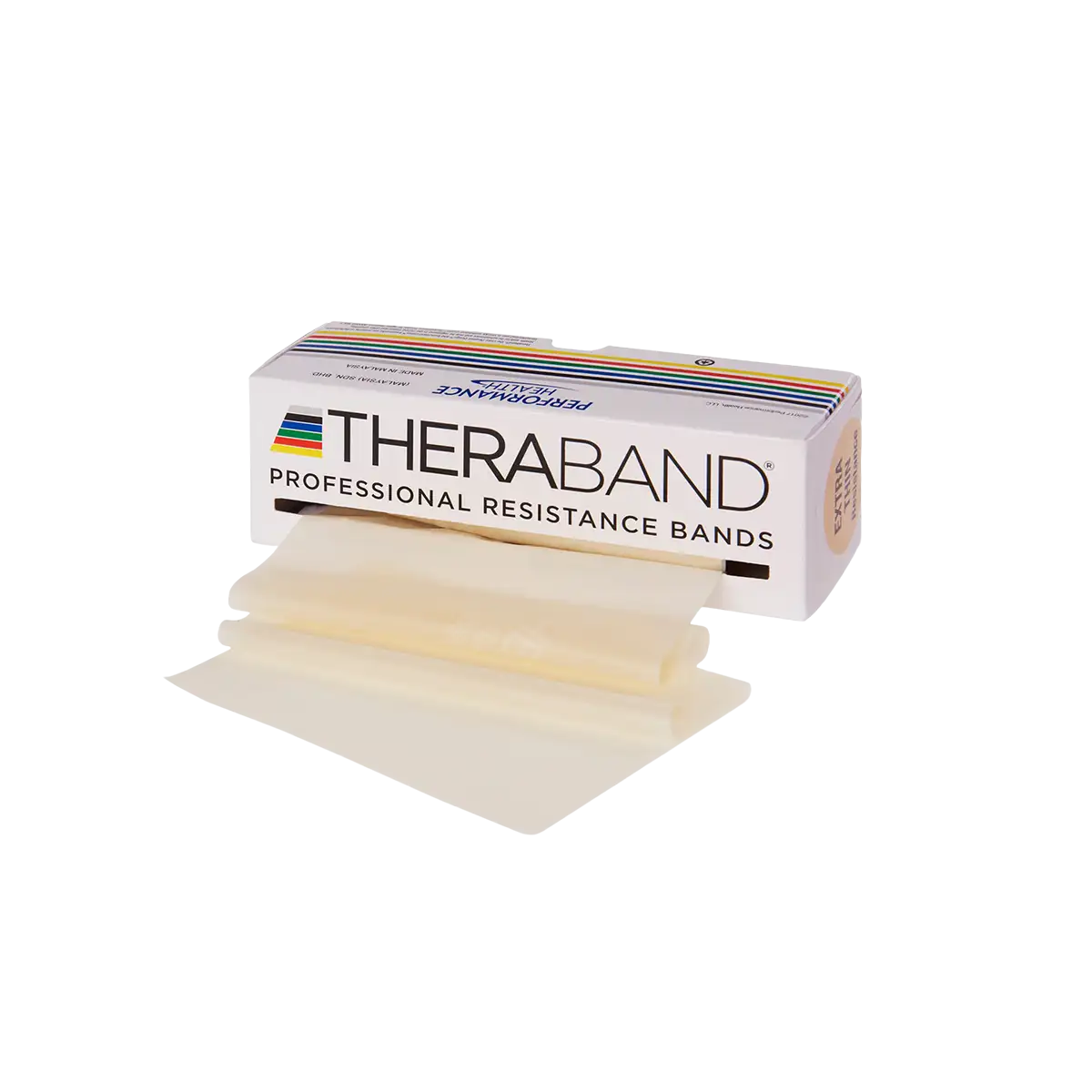
- Start with simple full-body exercises such as squats, lunges, planks, or exercises with a TheraBand .
- Only increase intensity or duration once your body has become accustomed to the basic program.
Support from friends or a personal trainer can help you overcome insecurities and stay motivated. The important thing is: you don't have to start perfectly – you just have to start.


Are there any videos that can help me get started with fitness training?
In the following video, personal trainer Arne Derricks explains what you should pay attention to during fitness training as a beginner and how to avoid typical mistakes. This allows you to calmly observe what proper exercise execution looks like and which basic principles you should follow:
You can use the video as a guide for your home fitness training, pausing movements, rewinding and practicing until you feel confident.
How can I improve my posture during fitness training?
You improve your posture during fitness training by consciously analyzing and correcting it, and regularly practicing it with appropriate exercises.
Many people are no longer consciously aware of their posture because incorrect patterns have crept in over the years. Often, the brain even perceives this posture as "normal." This is where trained eyes can help: doctors, physiotherapists, or qualified trainers can recognize whether structures, muscles, or habits are affecting posture.
Typical steps to improve posture:
- Analysis: Have yourself observed during simple exercises, for example squats, lunges or rowing.
- Correction: Receive specific instructions on how to align your head, shoulders, pelvis, and knees.
- Balance: Perform targeted exercises to reduce muscle imbalances, such as strengthening the back and gluteal muscles and stretching shortened structures.
- Transfer to everyday life: Pay attention to the newly learned posture while sitting, standing and walking.
This will gradually make your posture more stable and healthier.
How often should I train as a beginner?
As a beginner, you should generally plan to do fitness training two to three times per week so that your body makes progress and still has enough time to recover.
If you train too little, you often end up with little adaptation. Conversely, training too frequently and intensely without sufficient sleep, nutrients, and rest can lead to overtraining, exhaustion, and a drop in performance. Especially in the beginning, it's advisable to train less frequently but consistently.
Important points for your training frequency:
- 2-3 sessions per week are usually ideal for fitness training for beginners to get the body used to the strain.
- Recovery is just as important as the training itself: sleep, nutrition and rest determine how well you improve.
- Movement vs. training: Everyday movement such as walking or cycling is important, but does not replace structured training with targeted increases in intensity.
Regularly ask yourself: "When does training realistically fit into my everyday life – and can I give my body rest and good nutrients afterwards?" This will help you find the frequency with which you can stick with it in the long term.

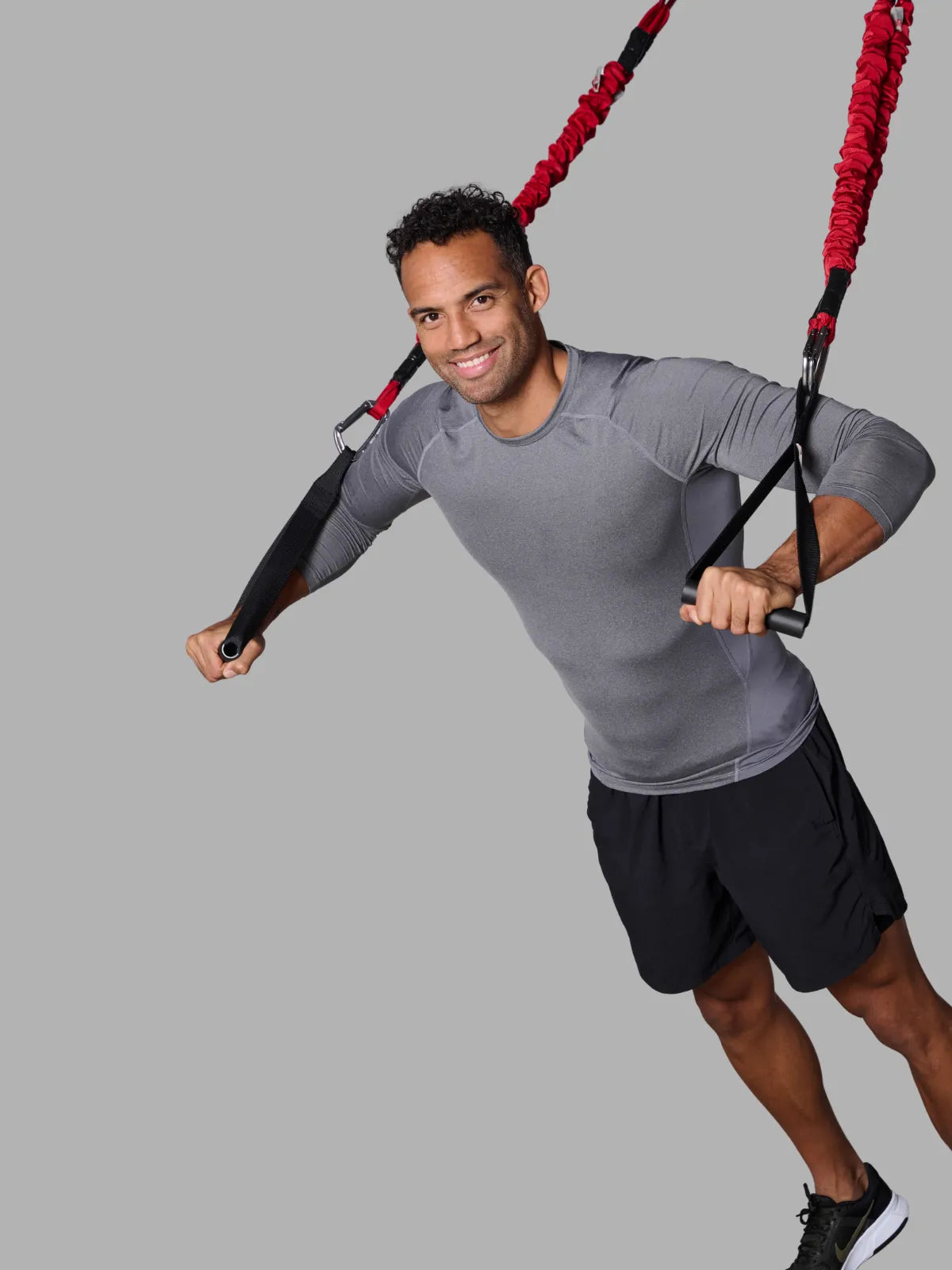
Fitness training is also fun for two. Image source: Mira Hampel Photo/Film
How do I breathe correctly during fitness training?
You breathe correctly during fitness training if you exhale during the strenuous phase of the exercise and inhale during the easier phase, while remaining calm and controlled.
During a workout, your body needs more oxygen to produce energy. Conscious breathing helps ensure this supply. Abdominal breathing and so-called rib cage breathing are particularly effective: In this technique, the abdomen and rib cage expand laterally, allowing the diaphragm to function optimally.
A simple rule of thumb for your strength training:
- Strenuous phase (concentric) – lifting, pushing, or pulling weight: exhale. Example: You exhale when lifting the dumbbells during a biceps curl.
- Eccentric phase – lowering or yielding to the weight: inhale. Example: Inhale as you lower the dumbbells.
This rule applies to both free weights and machine training. Over time, breathing will become routine – and you'll be able to safely access more power.
How do I incorporate stability and mobility into a healthy fitness training program?
You bring stability and mobility to your fitness training by specifically training both and paying attention to a balanced ratio.
Stability means that joints and torso can control movement. Mobility describes the available, functional range of motion in joints and muscles. For healthy movement patterns, your body needs both – like a balanced scale. Too much stability without mobility can make you stiff, while too much mobility without stability increases the risk of injury.
Practical implementation in training:
- Mobility first: Gentle mobilization exercises for ankles, hips, thoracic spine and shoulders prepare your joints for the strain.
- Stability afterwards : Exercises such as forearm plank, side plank, single-leg standing exercises or controlled squats strengthen the postural muscles.
- Then performance: Only when mobility and stability work well together is it worthwhile to use more weight or higher intensity.
This lays the foundation before you focus on pure performance metrics – making your fitness training safer and more efficient in the long run.
How can I make my home fitness training more effective?
You can make home fitness training effective by training with simple full-body exercises, minimal equipment, and a clear plan.
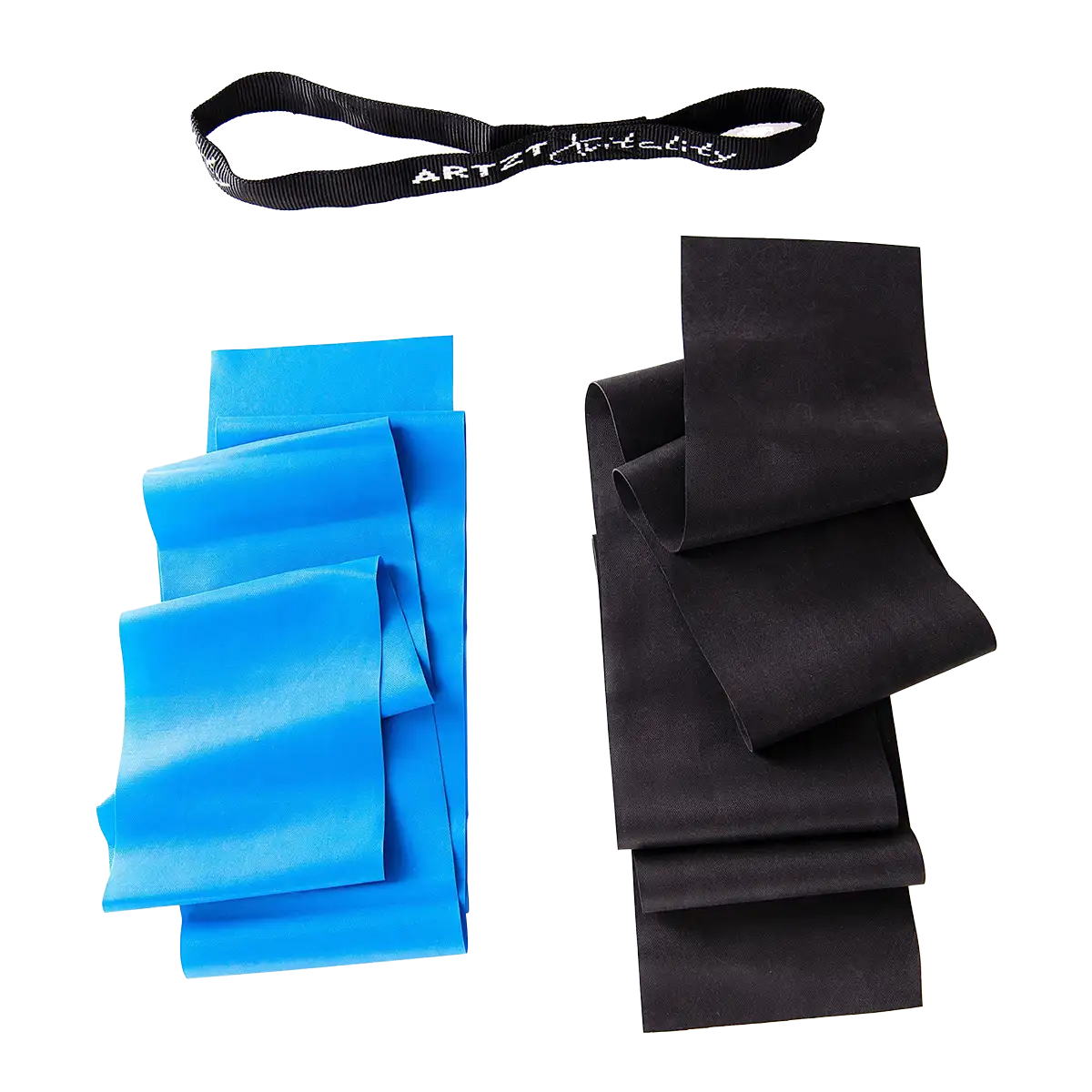
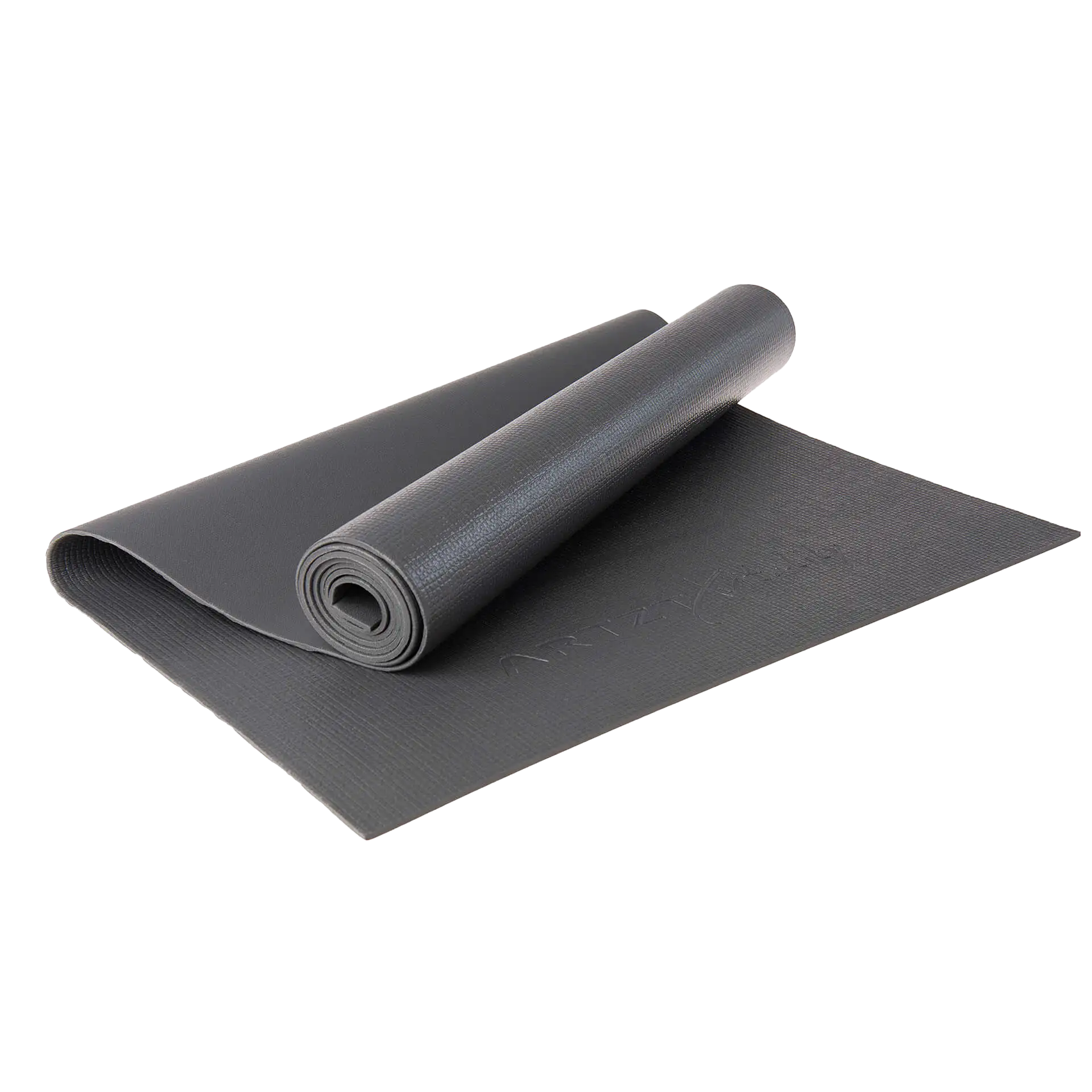
For an effective home workout, you primarily need one thing to begin with: your own body strength. A non-slip mat , one or two resistance bands, and perhaps a small additional weight are often enough to complete a full workout.
This is what a simple program could look like:
- Warm-up (5-10 minutes): light walking in place, arm circles, light mobilization exercises.
- Strength training (15-20 minutes): Squats, lunges, plank, rowing with a band, shoulder press with resistance bands.
- Stability and balance (5-10 minutes): single-leg stance, slow controlled movements, trunk stabilization exercises.
- Mobility and stretching (5 – 10 minutes): Stretching for legs, hips, back and shoulders.
Conclusion: There is a suitable fitness training program for everyone.
You decide how you want to adapt the intensity, scope, exercise selection and training location to your goals, prior experience and daily routine.
Whether at the gym, in physiotherapy, in the park, or during a fitness workout at home – you can put together a program that suits you. The following are important:
- Realistic goals instead of unrealistic ideals.
- A structured yet flexible plan that can be integrated into your everyday life.
- Willingness to accept help, for example from coaches or digital resources such as videos.
- Patience and perseverance are needed, because progress takes time.
If you take these points into account, regular fitness training will gradually become a fixed, positive part of your life – with noticeable benefits for health, well-being and performance.
Sources:
- Sportbuzzer — “Fitness for Beginners: Tips for a Successful Start to Your Training” (accessed: February 25, 2026) — https://www.sportbuzzer.de/fitness/fitness-fuer-einsteiger-tipps-fuer-deinen-erfolgreichen-trainingsstart-T4BR2MFTRJFLPGGBATBAZAPFF4.html
- DAK-Gesundheit — “Sport for beginners: How to get started” (accessed: February 25, 2026) — https://www.dak.de/dak/gesundheit/bewegung-und-sport/bewegungstipps/sport-fuer-anfaenger_88736
Transparency note: This text was created and subsequently edited by our editor Jonas using AI.

Written by Jonas Schön