
5 Neuroathletics Exercises for Headaches
Reading time: 5 minutes
Whether it's a computer, mobile phone, or tablet – we often spend hours staring at various screens, not infrequently at several simultaneously. This behavior can quickly overwhelm our brain and body and lead to unpleasant consequences, such as headaches. The right neuro-athletic exercises can help. We give you five simple tips for headaches in the office.
How do headaches develop?
One of the main triggers for everyday headaches is the overexertion of the eye muscles, also known as Computer Vision Syndrome or Office Eye Syndrome. It occurs when we stare at the monitor for hours without changing our gaze. Natural vision usually means tilting the head slightly and lowering the eyelids when looking at things nearby. Staring straight ahead strains our eyes and requires increased energy consumption.
If several screens are used, requiring different viewing angles, the eyes have to work even harder. This can lead to the visual system becoming fatigued and trying to shift the strain to other parts of the body. The result is tense muscles, for example, in the neck or jaw.
Poor posture and stress promote headaches
If the eyes are overstrained, the field of vision often becomes blurry. That's why many people sit hunched over their desks. This static posture can also trigger tension, for example, in the neck, shoulders, or head area. In addition, leaning forward prevents economical breathing and thus oxygen supply. The body often reacts with tension headaches, which feel pressing and constricting.
Stress, caused by the constant switching between many to-dos and the endless flood of information, can also cause muscle tension and thus headaches. These can lead to various physical discomforts, including nausea, vomiting, sensitivity to light and noise, and an impairment of our cognitive abilities.
The role of the brain in headaches
If severe headaches remain untreated for a long time, they can become chronic complaints that significantly impair the quality of life. Our brain plays a crucial role here. There are different types of headaches that can be caused by different mechanisms in our brain. Migraines, for example, arise from increased activity in certain areas of the brain.
>> Reading tip: Understand and treat migraines – with 3 effective exercises
Our nervous system also influences how we perceive and deal with pain. When pain signals from affected areas such as the muscles or blood vessels in the head reach our brain, they are interpreted and processed there. This affects the intensity and duration of headaches. Psychological factors such as anxiety or stress also contribute to how strongly we feel the pain.


More relaxation: 5 exercises for headaches
But how can you get rid of annoying tension headaches? For this question, we consulted Luise Walther, an expert in neurotraining. She reveals 5 effective tips for a more relaxed work life with less pain:
1. Take screen breaks
Constantly staring at screens tires our eyes. Give them a rest during your workday by looking into the distance for 20 seconds every 20 minutes. You can also relax your eyes with the following exercise:
Palming
To relax your eyes, close them and place both hands over your eyes. Breathe evenly and deeply through your nose, in and out, and hold this position until you no longer see any flashes or color spots, but perceive a completely black image.
2. Incorporate movement into your office routine
With short movement breaks, you mobilize tense muscles and bring fresh oxygen into your body:
Walk and Talk
Stand in front of the arrow board with your arms outstretched forward. Now follow the arrow direction with your arms: arrow up, both arms up. Arrow down, both arms down. Arrow right, right arm to the right, and arrow left, left arm to the left.
3. Stress management
Stress can be reduced through good workplace management. Try these tips, for example:
- Avoid multitasking whenever possible. If you are working on important projects on screen, the rule is: phone off and away.
- Only check your emails at fixed times and process them immediately.
- Only keep the documents you need for the current activity on your desk.
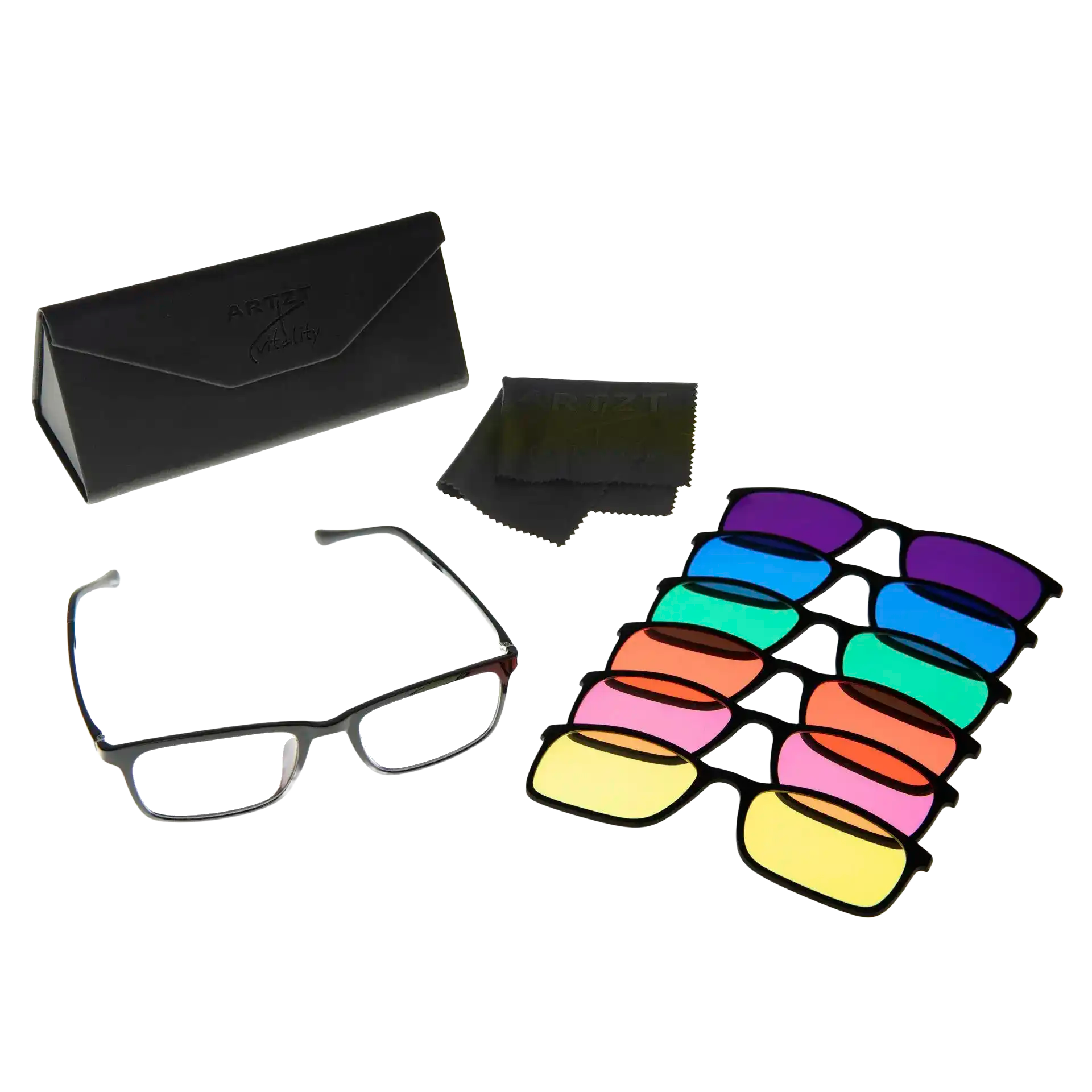
Neck and thoracic spine mobilization with green glasses
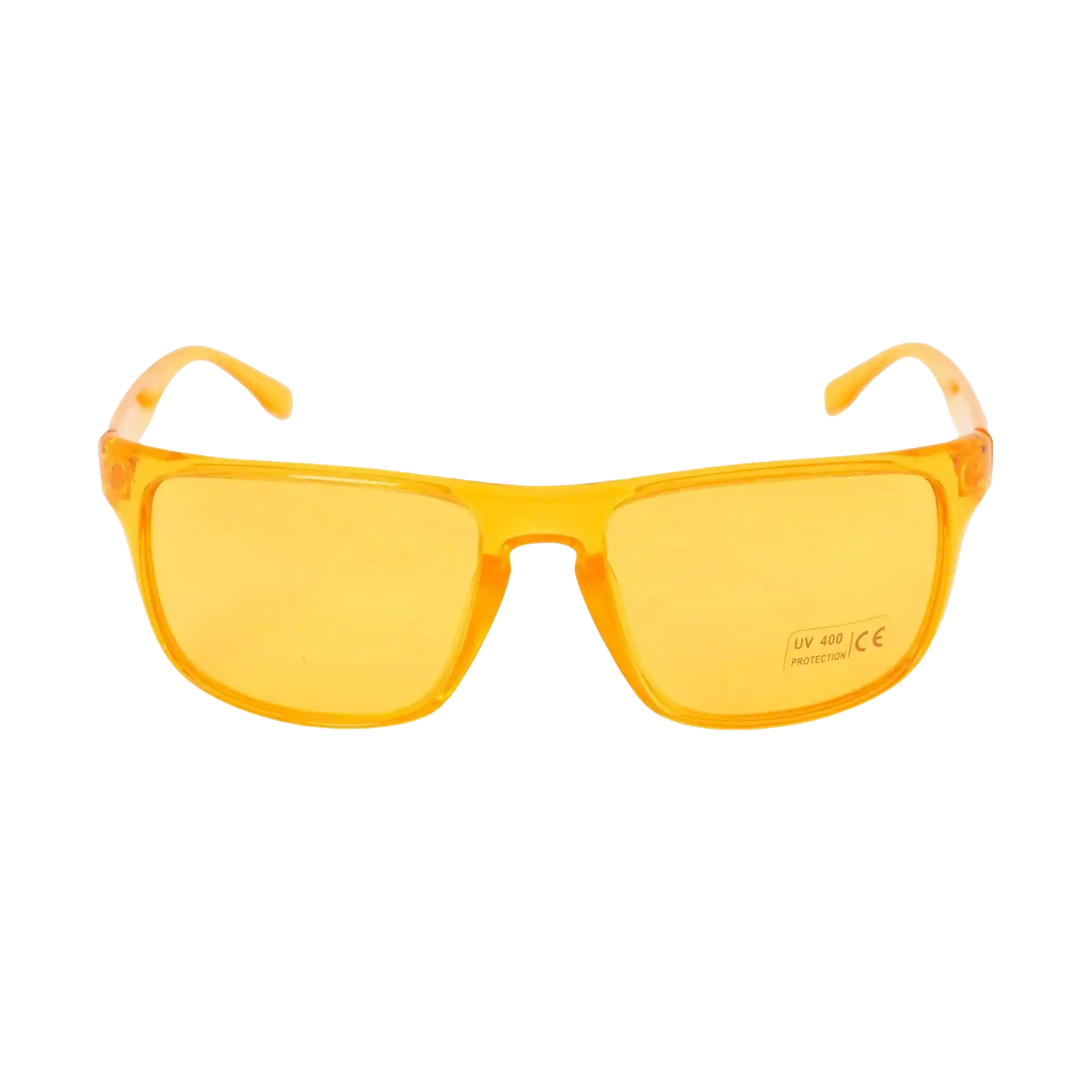
Stand with your feet about shoulder-width apart and (optionally) put on your green color glasses. Press your palms together, inhale deeply, and rotate your arms and head in opposite directions as you exhale. Return to the center as you inhale. As you exhale, rotate again in opposite directions, and as you inhale, return to the center. Now pull both hands apart, inhale deeply again, and repeat the exercise sequence. The green glasses can additionally lower your muscle tone and have a neutralizing, calming, and balancing effect.
4. Relaxation techniques
High workload and tense posture can affect our breathing. Often, during these phases, we breathe shallowly and quickly and do not supply our body with enough oxygen. Short breathing breaks are therefore a useful companion for your working day:
Breathing belt
Fasten the breathing belt with slight resistance around your abdomen directly below your ribs. Breathe in and out against the resistance of the breathing belt for at least two to five minutes, completely relaxed.
5. Eye training
Our eyes are also controlled by muscles that can become tense. You can train your eyes with this exercise:
Eye mobilization with arrow board
Stand in front of the arrow board. Move your eyes in the direction of the arrow without moving your head: arrow up, eyes up. Arrow right, eyes right, arrow down, eyes down, arrow left, eyes left. Stop when it becomes strenuous for your eyes.
Conclusion: Simple exercises can help with headaches
Long screen times and stress can overstrain your eye muscles and cause tension in your neck and back. But with the right relaxation exercises and targeted neurotraining, you can actively counteract this. And that's regardless of how athletic you are. Because with regular eye exercises, conscious breaks, and movement in everyday life – especially as a small break from screen time – you relieve your nervous system, for example. This way, you can reduce pain.
It doesn't always have to be a big sports or training session; even small exercises help. So: consciously treat yourself to more movement and relaxation more often – your eye muscles and your body will thank you!

Written by Isabel Kunoth